In many religious communities, women stepping into pastoral roles often face the challenge of finding attire that balances authority, elegance, and tradition. Standard business wear fails to convey the spiritual significance of their position, while conventional clerical clothing often lacks a feminine touch. The solution comes in the form of Women’s Clergy Suits, designed to honor both sacred tradition and modern needs. These garments provide comfort, dignity, and a sense of professional identity, bridging the gap between historical reverence and contemporary ministry. As a versatile clergy outfit, they support women in fulfilling their pastoral responsibilities with confidence.
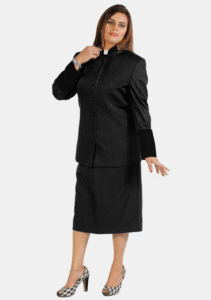
The Roots of Women’s Clergy Suits
Initially, female ministers wore attire modeled directly on male clergy, offering little recognition of their unique role. The history of Women’s Clergy Suits mirrors the gradual evolution of women in religious leadership. As women assumed more prominent pastoral responsibilities, tailored suits were introduced to reflect both modesty and authority. These garments were designed to convey leadership while maintaining reverence, creating a clear visual identity for women in the Church. The introduction of these specialized clergy outfit options marked a turning point in ecclesiastical fashion, ensuring female ministers could represent their calling with grace and professionalism.
Symbols Woven Into Every Stitch
Each Women’s Clergy Suit carries a symbolic meaning within its design. Colors, cuts, and accents are carefully chosen to reflect humility, service, and spiritual authority. Subdued hues often denote reverence, while subtle embroidery or piping may reference denominational traditions. Even small details, such as lapels or button placement, are intended to respect historical ecclesiastical norms. By maintaining these symbolic elements, the clergy outfit communicates a balance of tradition and empowerment, allowing women ministers to convey authority visually while honoring their spiritual heritage.
Modern Fabrics for Comfort and Mobility
Traditional clerical garments often prioritized symbolism over practicality, leaving women ministers constrained in movement during services. The advent of modern textiles revolutionized Women’s Clergy Suits, incorporating breathable, lightweight fabrics that offer comfort for long hours of ministry. These materials maintain the dignified appearance of a traditional clergy outfit while ensuring ease of motion. Whether officiating a ceremony, leading a sermon, or counseling parishioners, these updated garments allow women to fully engage in their pastoral duties without sacrificing elegance or spiritual representation.
Inclusive Silhouettes for All Body Types
Modern ecclesiastical fashion emphasizes inclusivity, designing Women’s Clergy Suits that cater to a range of body shapes and sizes. Tailored fits enhance professional presence while respecting comfort and modesty. By embracing inclusive silhouettes, these garments affirm that spiritual authority is not limited by physical form. The evolution of the clergy outfit demonstrates how tradition can adapt to modern sensibilities, ensuring that all women in ministry feel represented and confident in their sacred attire.
The Rise of Customization
Personal expression is increasingly important for female ministers. Many Women’s Clergy Suits now allow for customization, including subtle embroidery, colored trims, or bespoke tailoring. These personalized touches enable ministers to reflect their individual spiritual journey and theological perspective while respecting the broader ecclesiastical tradition. Customization transforms a standard clergy outfit into a meaningful symbol of identity, highlighting both personal devotion and professional commitment.
Preserving Tradition Amid Trends
Despite modern innovations, Women’s Clergy Suits continue to honor centuries-old traditions. Designers carefully maintain classic structures, such as tailored jackets, skirts, and modest hemlines, ensuring that sacred symbolism is not lost. Color schemes often adhere to historical norms, reflecting humility and service. By blending tradition with contemporary design, these suits represent a thoughtful approach to clergy outfit fashion, bridging the past and present in meaningful ways.
Professionalism in Every Setting
For women in pastoral roles, attire conveys professionalism and authority. Women’s Clergy Suits communicate that ministers are serious about their calling while remaining approachable to congregants. These garments support both ceremonial and everyday ministry functions, from leading worship to pastoral counseling. As a versatile clergy outfit, the suit helps ministers project credibility, respect, and spiritual leadership, reinforcing their presence within the community.
Testimonials of Empowerment
Many women in ministry report feeling empowered by wearing Women’s Clergy Suits. These garments become more than clothing they embody spiritual identity, confidence, and purpose. Clergy members often describe a renewed sense of focus and authority when donning these suits, emphasizing how the clergy outfit enhances both personal and communal expression of faith. By merging tradition with contemporary needs, the attire strengthens the connection between the wearer, the congregation, and calling.
Adapting to Contemporary Ministry
As the nature of ministry evolves, so too do Women’s Clergy Suits. Designers are exploring fabrics that resist wrinkles, allow layering, and provide adaptability across liturgical seasons. Accessories such as stoles or crosses can be incorporated without disrupting the tailored silhouette, maintaining a refined clergy outfit appearance. This approach ensures that women ministers are equipped to serve effectively, blending sacred tradition with practical innovation.
A Vision for the Future
The future of Women’s Clergy Suits promises continued innovation, including sustainable fabrics, wider customization, and designs that reflect diverse cultural traditions. As women assume more visible leadership roles in churches worldwide, the clergy outfit will continue to evolve, balancing reverence, elegance, and functionality. This ongoing development underscores a commitment to honoring both spiritual heritage and the dynamic role of modern female ministers.
Conclusion
In the intersection of tradition, contemporary trends, and personal testimony, Women’s Clergy Suits emerge as more than mere garments they are living narratives of faith, authority, and empowerment. Each suit represents the journey of women in spiritual leadership, blending historical reverence with modern style. As the ecclesiastical landscape continues to evolve, these suits stand as a testament to devotion, professionalism, and grace, reinforcing the importance of thoughtful clergy outfit design for the women who lead with heart, vision, and dedication.